
Your Vision
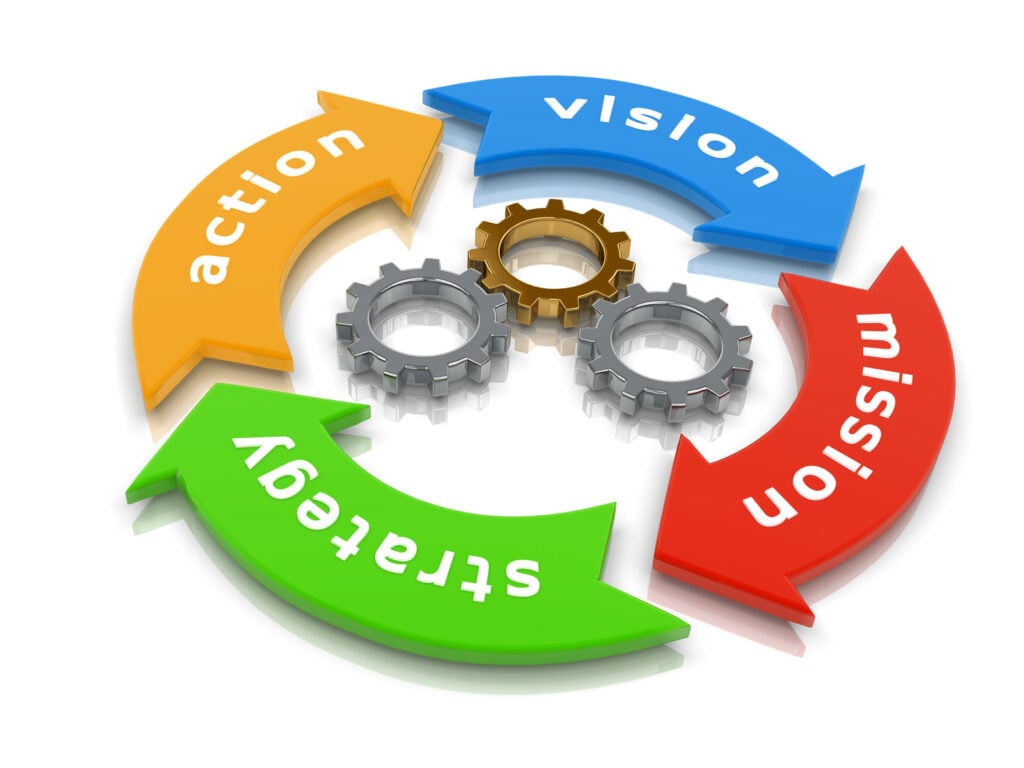
Focus determines direction.
In my book I tell the story of a chef I call Jorge. He knows exactly what he wants to cook and he knows he wants high-end clients, an a la carte menu, unique dishes, real prices. Then he opens the doors. He picks red chairs because they were on sale, a friend designs a green logo, the menus are blue, the sign out front is yellow on purple, and his kids hand out orange flyers on the corner.
Picture him two years in: he still has a restaurant. The menu has changed, the prices have dropped, the crowd is different, and he spends as little time there as he can. Did he succeed or did he fail? He has a business. He does not have his vision. And that gap is what this lesson is about.
A vision is a destination
People confuse vision with inspiration. They think it is a feeling you get on a good day. A vision is a specific picture of what the business looks like when it is finished, or at least when it has become what you intended. Who is sitting at the tables. What the trucks look like lined up in the lot. What a customer says to their neighbor about you. What your own week looks like when the business no longer needs you in it every hour.
Here is the distinction. A dream is something you have. A vision is something you can describe to another person clearly enough that they could recognize it if they walked into it. Jorge had a dream. He never wrote the vision down, so every small decision got made by whoever was standing nearest with an opinion, and each one pulled him a little further from where he meant to go.
Your dream will affect your mindset, and your mindset determines where the business can go and whether you will let it expand. It is the combination of your beliefs, your dream and what you are willing to do that turns the dream into something real. The vision is where you put that into words.
Why the vision comes before the logo
The vision is the filter for every other branding decision you will make in this track. Name, colors, look, the way you talk to customers, who you hire. If you do not have the filter, you cannot tell a good decision from a bad one. Red chairs are fine in the right room, and wrong for a quiet, dark-blue, high-end dining room.
You met the second Jorge in the first lesson. He starts with the same knowledge, the food and the target crowd, and then sets a foundation: a color theme, a name and a logo that reflect the cuisine, a menu designed from that, and a room that delivers the same feeling the paper does. Every piece answers to the vision.
You may be thinking that is easy with money. Consistency matters more than money or any of the details I just listed. You can sacrifice pieces, cut corners in creative ways, start with part of it, as long as everything you do put out matches the picture. What you cannot do is skip the picture.
Writing yours
Sit down with a page and answer these as if you are describing a place you have already been. Where is the business in five years? Who works there, and how do they treat a customer? What does a customer pay, and why are they glad to? What does your day look like? What do people say about you when you are not in the room?
Then write it as a paragraph, not a slogan. Vision statements on office walls are usually one sentence of corporate nothing that nobody could recognize if it came true. Yours should be specific enough that you would know the day you arrived. “A busy shop with three trucks, a full-time office manager, and customers who call us by name and never ask for a second quote” is a vision. “To be the leading provider of quality service” is wallpaper.
Read it back and ask the Jorge question: if I make every decision this year with this paragraph in front of me, where does the business end up? If the answer excites you, keep it. If it feels small, you are allowed to make it bigger. This is the one place where playing small costs you the most.
Before the next lesson
Write your vision as one paragraph, by hand if you can, and put it somewhere you will see it every working day. Then pull out the list of customer touchpoints you made in the branding lesson and mark each one with a plus or a minus: does it move toward the vision or away from it? Do not fix anything yet. Count the minuses.
Two or three hours of quiet, honest thinking, and it costs nothing. The writing is the easy part. The hard part is admitting how many current decisions were made by whoever had an opinion nearest to you, the way Jorge’s were.
Want the next one in your inbox?
The Open Book is one email a month about something we dealt with and how we solved it: a campaign we set up, how we are using AI, what worked, what did not. No selling.