
The Outcome: What All of This Adds Up To
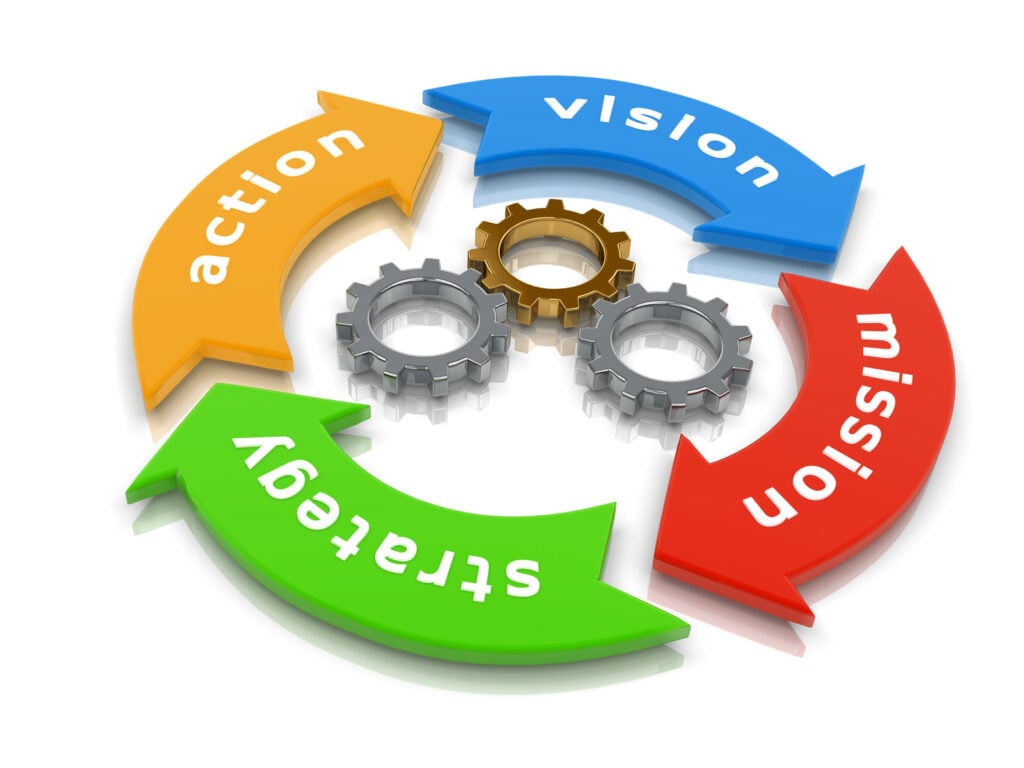
Focus determines direction.
If you have worked through the vision, mission, values and beliefs lessons honestly, you have four pages sitting in front of you: a vision, a mission, a short list of values, and a list of beliefs you are now looking at with some suspicion. It is easy to treat those as four separate homework assignments. They are not. Put them together and you are holding something the book calls the internal brand, and it is the foundation that every visible piece of your business is supposed to be built on.
What the internal brand is
The internal brand consists of the vision, the mission, the values and the belief system that guide daily operations. That is the whole definition and I want you to notice what is not in it. There is no logo. No colors. No name. No website. Those are the external brand, and they come later, because they are supposed to be a reflection of this.
Think about what happens when people skip this step, and most do. They open a business and go straight to the fun part: the name, the logo, the truck wrap. They build an outside with nothing behind it. It looks fine for a while. Then a customer has an experience that does not match the truck, and the customer trusts the experience. I say it plainly in my book: you can have the best-designed logo, business cards and advertisements, but if people do not get the experience along with them once they do business with you, it has all been for nothing.
The internal brand is what makes the experience predictable. It is the reason a customer can walk into two locations of a well-run chain and feel the same thing, or call your shop on a day you are out and be treated the way you would have treated them.
How the four pieces fit
Let me show you how they connect, because the connections are where the power is.
The vision sets the destination and gives you a filter for every decision. The mission turns the vision into daily behavior that can be taught. The values set the price you are willing to pay to protect that behavior when it is inconvenient. The beliefs are the assumptions underneath all three, and they either support the vision or quietly sabotage it.
Now run a contradiction check. Does your mission actually get you toward your vision, or does it describe how you run the business today? Do your values protect the mission, or is there a value in the list that would make you break the mission under pressure? Is there a belief on your page that makes the vision impossible? An owner whose vision is a premium brand, whose mission says “we always find a way to say yes,” and who believes “people around here will not pay for quality” has three documents at war with each other. The customer will feel the war before the owner sees it.
This is also where I want to bring back a hard truth from earlier in the course. The most successful business people I have studied were willing to put their egos aside to get where they were going. Your four pages may reveal that something you built, and love, does not belong. That is information you did not have last week, and nothing to be ashamed of.
The outcome is a business built with a purpose
Years ago I worked with restaurant owners who did what Jorge, the chef in my book, did in the second version of his story: they decided what the place was for before they decided what it looked like. A restaurant built with a purpose feels different the moment you walk in, and you cannot always say why. The chairs, the lighting, the way the server greets you, the menu design, they are all answering the same question. That question was answered in the internal brand.
That is the outcome of this section: one clear answer to the question “what is this business for, and how does it behave?” that you can hand to a designer, an employee, a partner or a new hire and have them make decisions you would recognize as yours.
From here, the rest of the track gets practical. Who exactly you are for. Whether your look matters. What car brands can teach you about positioning. Every one of those lessons will keep pointing back to these four pages, because the external brand has one job: to reflect the internal one so faithfully that the customer’s judgment matches your intention.
Before the next lesson
Put your vision, mission, values and beliefs on a single page, in that order. Read it top to bottom looking only for contradictions, and mark every place where one piece fights another. Then hand the page to someone who knows your business and ask one question: “Is this the business you see when you deal with us?” Their hesitation is your to-do list.
Assembling and checking takes an hour or two and costs nothing. If you want an outside read, a trusted customer or another owner in a different trade will often see the contradictions faster than a friend, because they have no reason to be kind about it.
Want the next one in your inbox?
The Open Book is one email a month about something we dealt with and how we solved it: a campaign we set up, how we are using AI, what worked, what did not. No selling.